
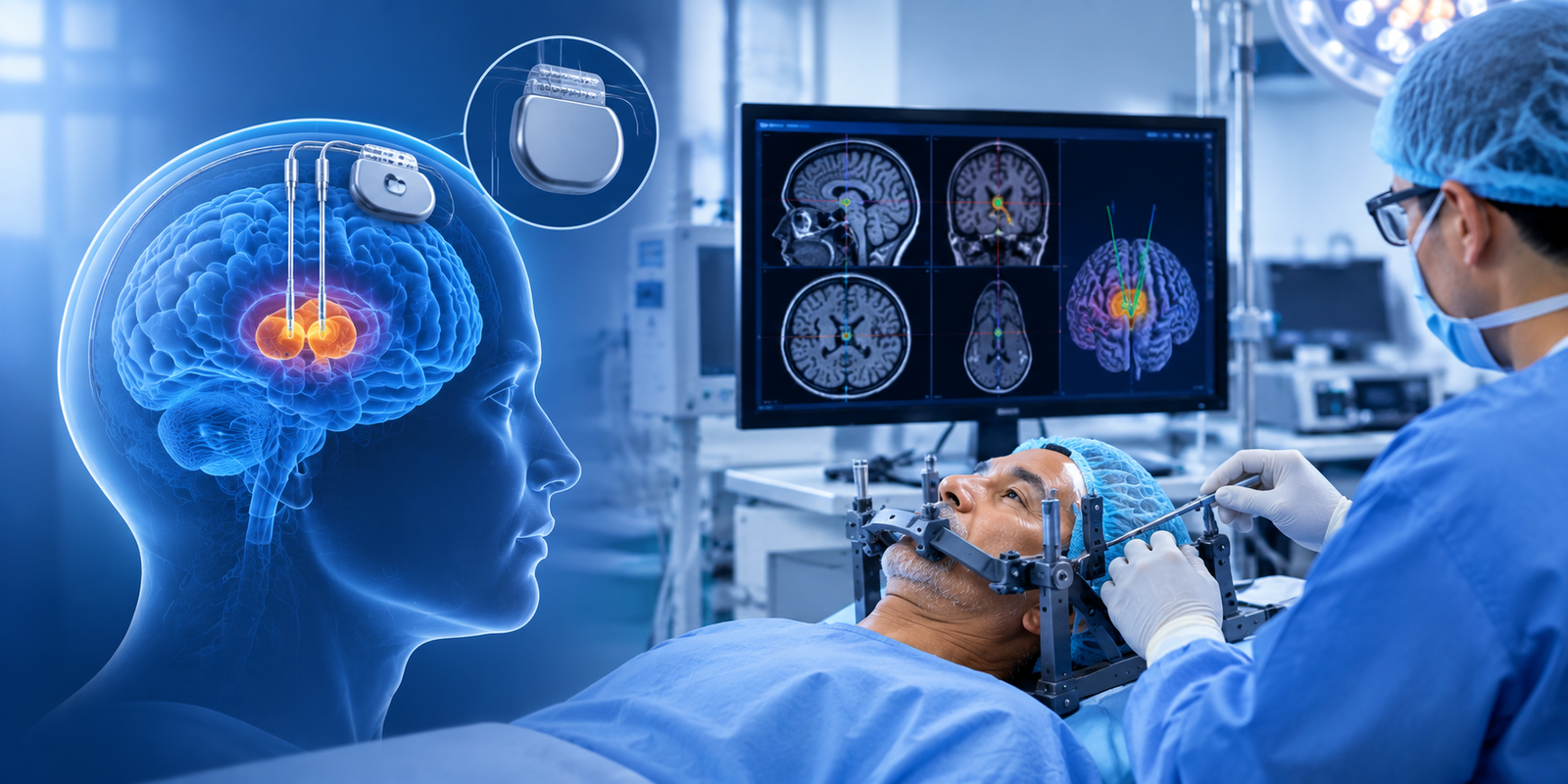
Deep Brain Stimulation (DBS) is an advanced neurosurgical treatment that uses a small implanted device to deliver controlled electrical signals to specific areas of the brain. It is primarily used to manage movement disorders such as Parkinson's disease, essential tremor, and dystonia when symptoms are not adequately controlled with medication. The system typically consists of electrodes placed in targeted areas of the brain and a pulse generator implanted under the skin, which sends electrical impulses to help regulate abnormal brain activity.
Patients with Parkinson's Disease
Individuals with Parkinson's disease who continue to experience significant movement symptoms such as tremors, stiffness, or involuntary movements despite appropriate medication.
Patients with Severe Tremors
People with essential tremor or other suitable movement disorders whose tremors interfere significantly with daily activities and remain difficult to control with medication.
Patients with Medication-Resistant Symptoms
Individuals whose symptoms are not adequately controlled by medication or who experience troublesome medication-related fluctuations or side effects.
Comprehensive Neurological Evaluation
Your neurology and neurosurgery team performs neurological assessments, brain imaging, medication-response evaluations, and other tests to determine whether DBS is appropriate.
Electrode & Device Implantation
Under appropriate anesthesia, thin electrodes are precisely positioned in targeted areas of the brain and connected to a pulse generator implanted beneath the skin, usually near the chest.
Device Programming & Follow-Up
After implantation, the DBS system is programmed and gradually adjusted according to the patient's symptoms. Regular follow-up visits help optimize stimulation settings and medication management.
Need Expert Medical Guidance?
Your Treatment Journey
Before Procedure
- You will undergo detailed neurological assessments and brain imaging to identify the appropriate treatment targets.
- Your medical team will evaluate your symptoms, medication response, overall health, and suitability for DBS.
- You may be advised to adjust certain medications and follow specific instructions before surgery.
During Procedure
- DBS surgery may be performed using local anesthesia with sedation, general anesthesia, or a combination depending on the surgical approach.
- The procedure involves precisely placing electrodes in targeted areas of the brain and connecting them to an implanted pulse generator.
- Advanced imaging and neuronavigation technologies may be used to improve the accuracy of electrode placement.
After Procedure
- You may remain in the hospital for monitoring and initial recovery following surgery.
- The device is programmed during follow-up visits, and settings may be adjusted over time to achieve optimal symptom control.
- Most patients gradually return to normal activities after recovery, while ongoing neurological follow-up is important for long-term device management.

Get Expert Medical Guidance
Connect with our specialists and receive trusted healthcare support without delays.
Success!
Your consultation request has been submitted.