
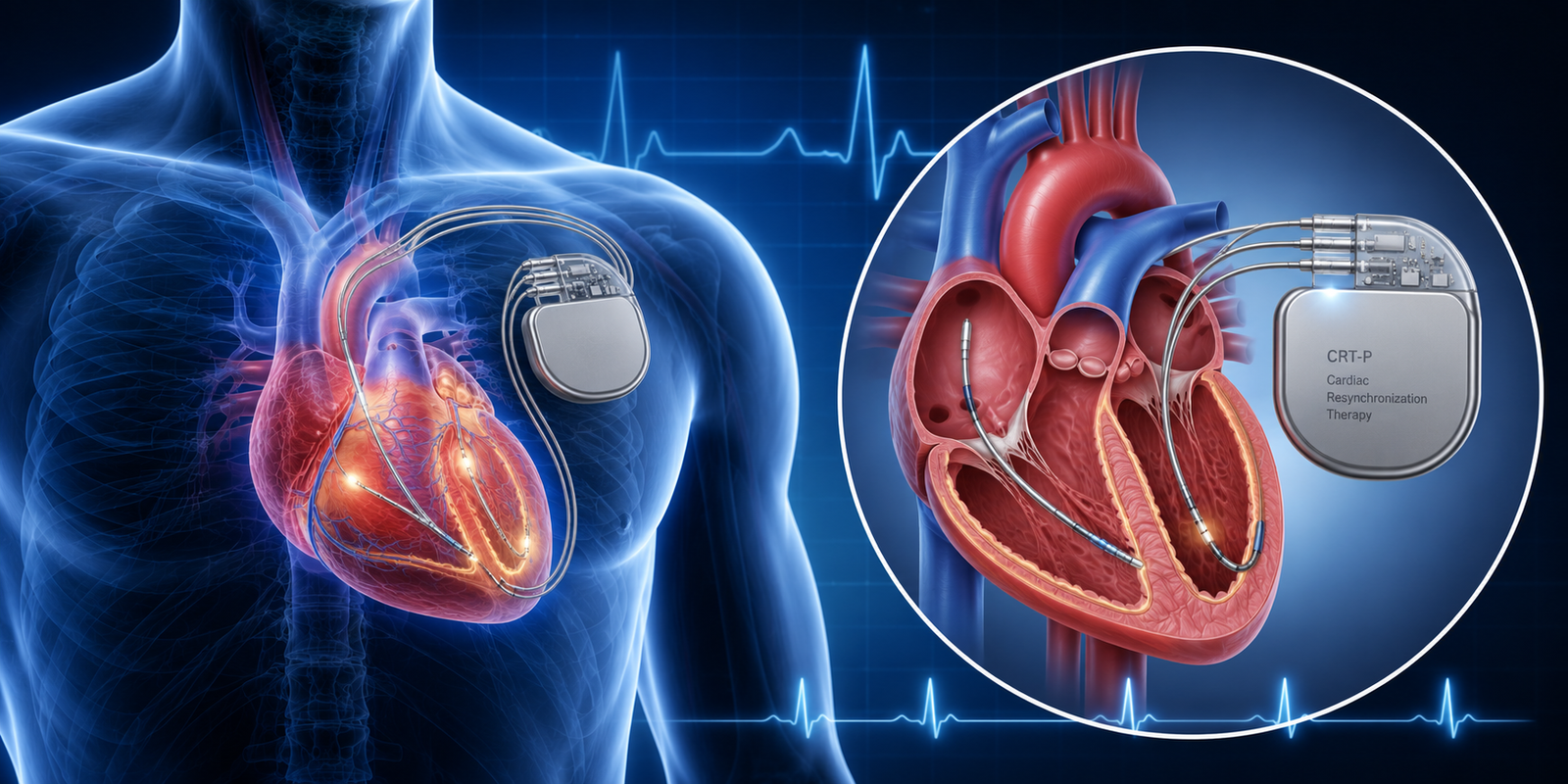
Cardiac Resynchronization Therapy (CRT) is an advanced treatment for certain patients with heart failure and abnormal heart rhythms. It uses a specialized device to send electrical impulses to the heart's ventricles, helping them contract in a more coordinated manner. By improving the synchronization of the heart's pumping chambers, CRT can improve blood circulation, reduce heart failure symptoms, increase exercise capacity, and improve overall quality of life. Depending on the patient's condition, the device may be a CRT-P pacemaker or a CRT-D device that also provides protection against dangerous heart rhythms.
Patients with Advanced Heart Failure
Individuals with moderate to severe heart failure whose symptoms continue despite appropriate medications and lifestyle management.
Patients with Poorly Synchronized Heartbeats
People whose heart's ventricles do not contract together effectively, often identified through an ECG showing a prolonged QRS interval or specific electrical conduction abnormalities.
Patients at Risk of Dangerous Arrhythmias
Individuals with heart failure who also have an increased risk of life-threatening ventricular arrhythmias may benefit from a CRT device with defibrillator capabilities.
Comprehensive Cardiac Evaluation
Your cardiologist performs an ECG, echocardiogram, blood tests, and other cardiac assessments to determine whether CRT is appropriate for your heart condition.
CRT Device Implantation
Under local anesthesia with sedation, leads are guided through a vein into the heart and connected to a small pulse generator implanted beneath the skin, usually near the collarbone.
Device Programming & Follow-Up
After implantation, the device is programmed according to your heart's needs and regularly checked to ensure it is functioning correctly and providing effective cardiac resynchronization.
Need Expert Medical Guidance?
Your Treatment Journey
Before Procedure
- Your cardiologist will review your symptoms, medications, ECG, echocardiogram, and overall heart function.
- You may undergo additional tests to confirm that you are an appropriate candidate for CRT.
- You may be instructed to fast and temporarily adjust certain medications before the procedure.
During Procedure
- CRT implantation typically takes 2–4 hours, depending on the complexity of the procedure.
- The leads are inserted through a blood vessel and positioned in the appropriate chambers of the heart.
- The pulse generator is placed under the skin and connected to the leads before the device is tested and programmed.
After Procedure
- Most patients are monitored for several hours or may stay overnight in the hospital.
- Mild pain, swelling, or bruising around the implant site can occur during the initial recovery period.
- Most patients can gradually return to normal activities within a few days to several weeks, with regular device checks and cardiology follow-ups.

Get Expert Medical Guidance
Connect with our specialists and receive trusted healthcare support without delays.
Success!
Your consultation request has been submitted.