
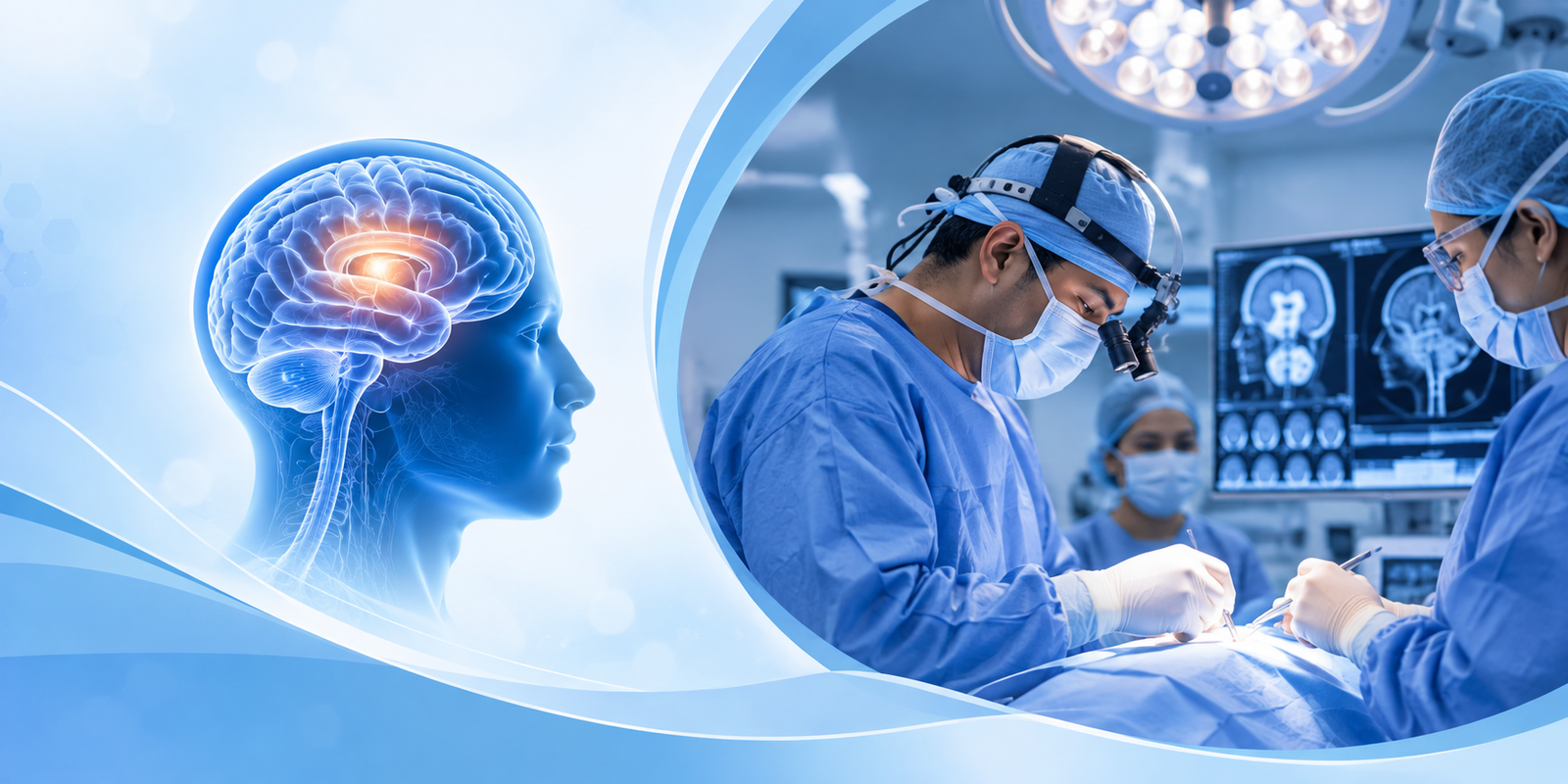
Craniotomy Surgery is a neurosurgical procedure in which a temporary section of the skull is carefully removed to provide the surgeon with access to the brain. It may be performed to treat brain tumors, bleeding, blood clots, aneurysms, traumatic brain injuries, infections, or other neurological conditions. After the required treatment is completed, the removed section of the skull is usually replaced and secured in its original position. The surgical approach is carefully planned to protect important brain functions and surrounding tissues.
Patients with Brain Tumors
Individuals who require access to the brain to remove, reduce, or obtain a biopsy of a brain tumor.
Patients with Brain Bleeding or Injuries
People with conditions such as intracranial bleeding, blood clots, or severe traumatic brain injuries that require surgical treatment to relieve pressure on the brain.
Patients with Other Neurological Conditions
Individuals requiring surgical access to treat conditions such as certain brain aneurysms, vascular abnormalities, infections, or other disorders affecting the brain.
Comprehensive Neurological Evaluation
Your neurosurgical team performs MRI or CT scans, neurological examinations, blood tests, and other assessments to determine the location and nature of the condition and plan the safest surgical approach.
Skull Opening & Brain Treatment
Under general anesthesia, the surgeon creates an opening in the skull to access the affected area of the brain and performs the required treatment, such as tumor removal, bleeding control, or repair of an abnormal blood vessel.
Skull Reconstruction & Recovery
After completing the procedure, the surgeon replaces the removed section of the skull and secures it with specialized plates or screws. Patients are then closely monitored during recovery.
Need Expert Medical Guidance?
Your Treatment Journey
Before Procedure
- You will undergo detailed brain imaging and neurological assessments to help plan the surgery.
- Your doctor will discuss the surgical approach, expected benefits, potential risks, and recovery process.
- You may be advised to fast and temporarily adjust certain medications before surgery.
During Procedure
- Craniotomy is generally performed under general anesthesia.
- The procedure may take several hours, depending on the condition being treated and the complexity of the surgery.
- Specialized technologies such as neuronavigation, intraoperative imaging, and brain monitoring may be used to improve surgical precision.
After Procedure
- You will be closely monitored in an ICU or neurosurgical unit following surgery.
- Headache, swelling, fatigue, or temporary neurological symptoms may occur during the initial recovery period.
- Hospital recovery and return to normal activities vary depending on the underlying condition and extent of surgery, with rehabilitation provided when necessary.

Get Expert Medical Guidance
Connect with our specialists and receive trusted healthcare support without delays.
Success!
Your consultation request has been submitted.