
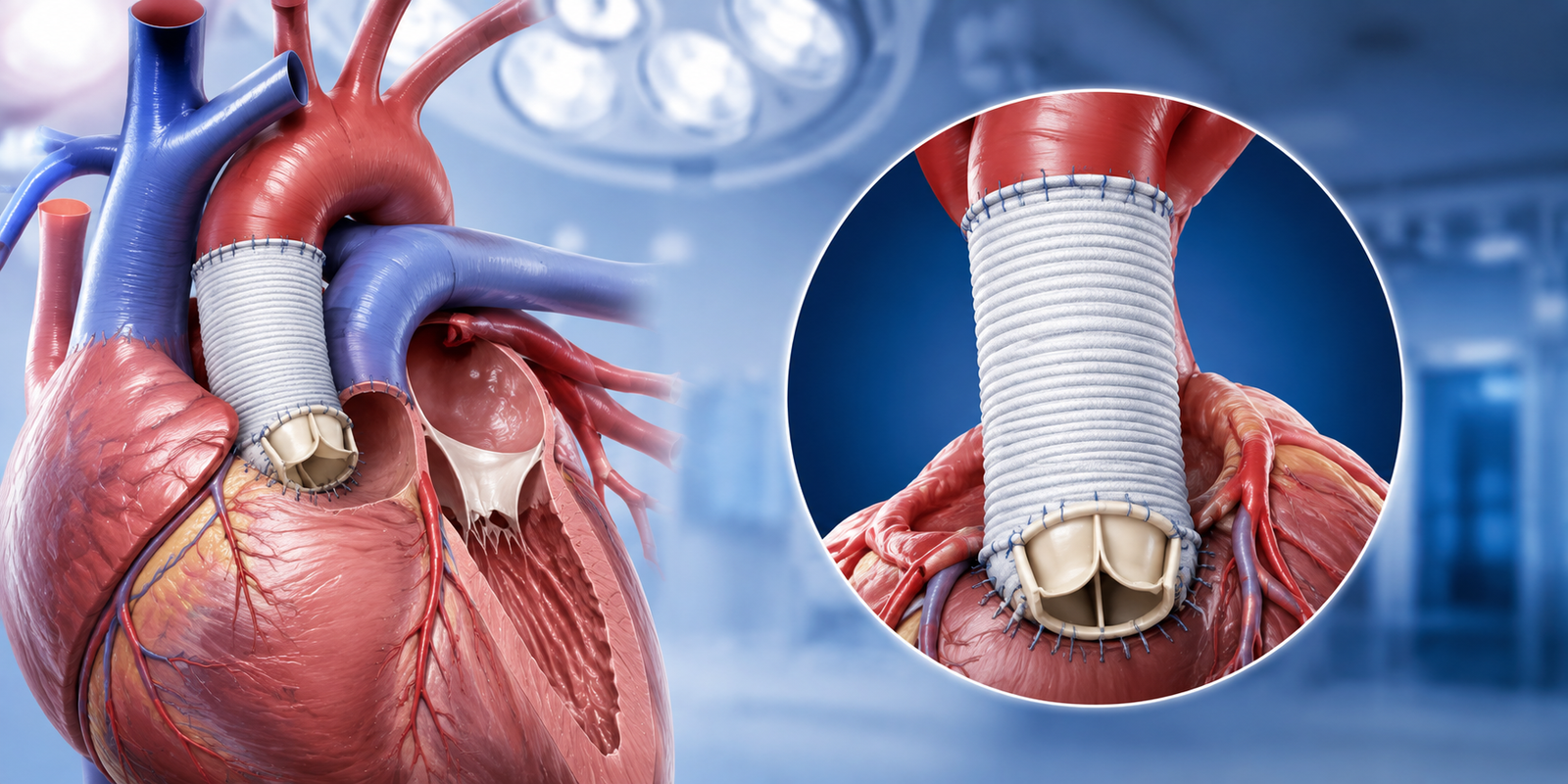
Bentall Procedure is a complex open-heart surgery used to treat diseases affecting the aortic root and aortic valve. During the procedure, the surgeon replaces the damaged section of the aorta and the aortic valve with a composite graft, while reconnecting the coronary arteries to the new graft. It is commonly performed for conditions such as aortic aneurysm, aortic root enlargement, aortic dissection, or severe aortic valve disease. The procedure helps restore normal blood flow and reduces the risk of life-threatening complications such as aortic rupture.
Patients with Aortic Root Aneurysm
Individuals with significant enlargement or weakening of the aortic root that may place them at risk of rupture or dissection.
Patients with Aortic Valve Disease
People with severe aortic valve damage or dysfunction occurring alongside aortic root disease and requiring combined surgical treatment.
Patients with Aortic Dissection
Individuals with certain types of aortic dissection or extensive aortic root damage where replacement of the affected aorta and valve is necessary.
Comprehensive Cardiac Evaluation
Your cardiac team performs echocardiography, CT or MRI scans, ECG, blood tests, and other assessments to evaluate the aortic root, valve, and overall heart function.
Aortic Root & Valve Replacement
Under general anesthesia, the surgeon removes the diseased aortic root and valve and replaces them with a composite graft containing an artificial or biological valve.
Coronary Artery Reimplantation
The coronary arteries are carefully reconnected to the new graft, allowing blood to continue flowing normally from the heart to the coronary circulation.
Need Expert Medical Guidance?
Your Treatment Journey
Before Procedure
- You will undergo detailed cardiac imaging and medical evaluation to assess the aorta and heart valve.
- Your surgeon will discuss the procedure, type of valve, potential risks, and expected recovery.
- Certain medications may need to be adjusted, and fasting is required before surgery.
During Procedure
- The Bentall procedure is performed under general anesthesia and usually requires a heart-lung bypass machine.
- The damaged aortic root and valve are replaced with a composite graft.
- The coronary arteries are reattached to the graft before the chest is closed.
After Procedure
- Patients typically spend several days in the ICU followed by additional hospital recovery.
- Recovery from major open-heart surgery generally takes several weeks to a few months.
- Regular cardiology follow-ups are essential, particularly for patients with a mechanical valve who may require lifelong blood-thinning medication and ongoing valve monitoring.

Get Expert Medical Guidance
Connect with our specialists and receive trusted healthcare support without delays.
Success!
Your consultation request has been submitted.