
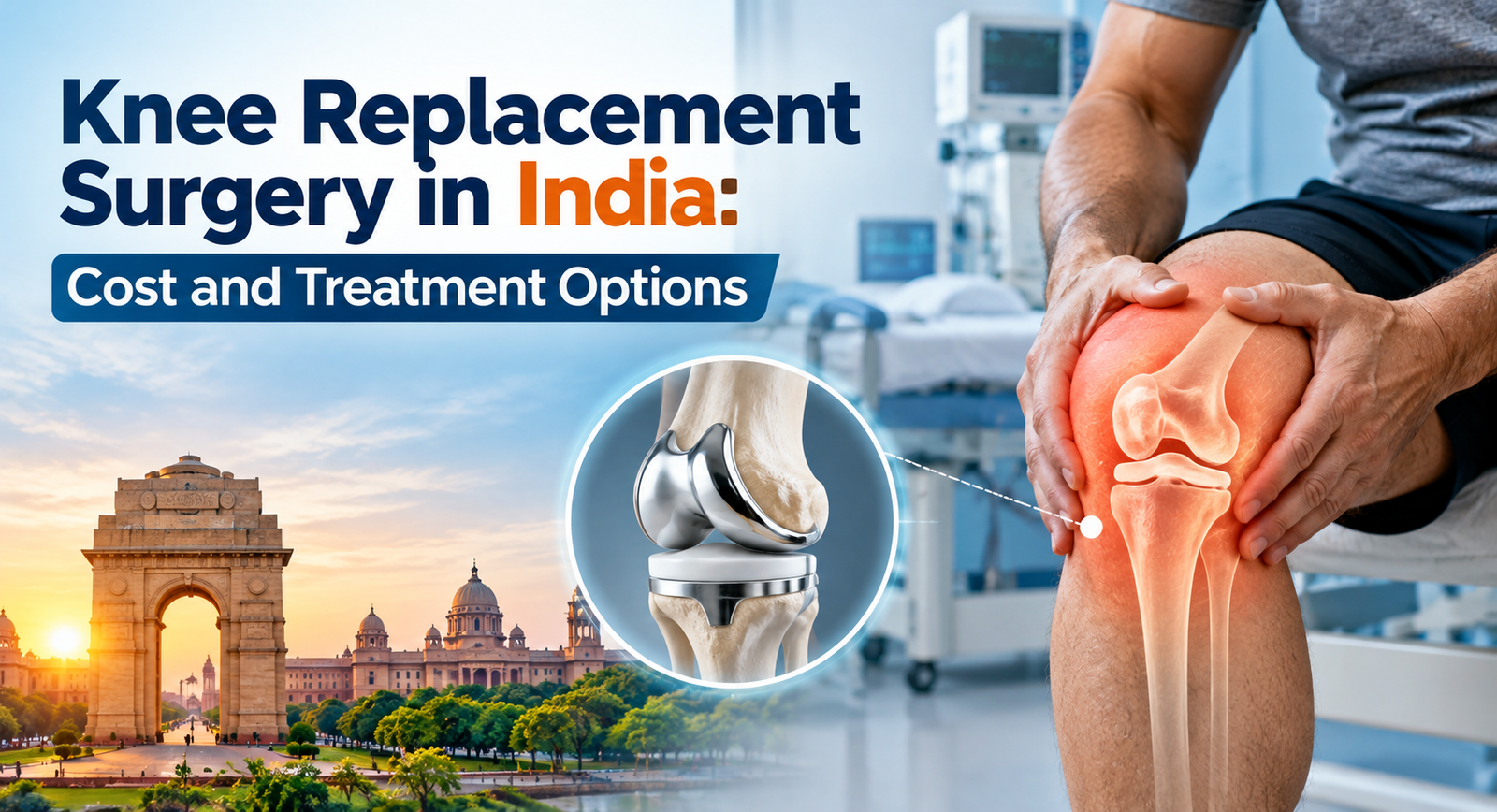

Knee replacement surgery in India typically costs around USD 4,500 to 7,000 for one knee and USD 8,500 to 12,000 for both knees for international patients, often 70 to 80 percent less than in the US or UK. Options include total knee replacement, partial knee replacement, robotic-assisted surgery, and revision surgery. Most patients stay in hospital for 3 to 5 days and in India for 2 to 3 weeks before flying home.
Knee pain has a way of shrinking your world. Stairs become a challenge, walks get shorter, and sleep is broken by aching joints. When medicines, physiotherapy and injections stop helping, knee replacement can give people their mobility and independence back.
For patients from Africa, the Middle East, Central Asia, the Gulf, and beyond, India has become one of the most trusted places for this surgery. This guide explains the treatment options, what knee replacement costs in India, what to expect during recovery, and how to plan the trip.
When Is Knee Replacement Surgery Needed?
A surgeon may recommend knee replacement when the joint is badly damaged, and other treatments no longer control the pain. Common reasons include:
- Osteoarthritis – age-related wear of the knee cartilage, the most common cause
- Rheumatoid arthritis – inflammation that damages the joint lining and cartilage
- Post-traumatic arthritis – after a fracture or serious ligament injury
- Knee deformity – such as bow legs or knock knees caused by arthritis
- Avascular necrosis – loss of blood supply to the bone
Signs you may be a candidate:
- Severe pain that limits walking, climbing stairs or getting up from a chair
- Pain at rest or at night
- Stiffness and swelling that do not improve
- Little or no relief from medicines, physiotherapy or injections
Knee Replacement Treatment Options in India
Your orthopaedic surgeon will recommend the right type after examining your knee and reviewing X-rays or an MRI.
Total knee replacement (TKR)
The damaged surfaces of the thigh bone, shin bone, and often the kneecap are replaced with metal and medical-grade plastic components. This is the most common option and suits most patients with advanced arthritis.
Partial (unicompartmental) knee replacement
Only the damaged part of the knee is replaced, while healthy bone and ligaments are kept. It suits patients whose arthritis is limited to one area. Recovery is often quicker, and the knee may feel more natural.
Bilateral knee replacement
Both knees are replaced, either in one operation or in two stages a few days or weeks apart. Many international patients choose bilateral surgery in one trip, provided their surgeon confirms they are fit for it.
Robotic-assisted knee replacement
The surgeon uses a robotic system to plan and guide bone cuts and implant placement with high precision. Leading Indian hospitals offer systems such as MAKO, CORI, and others. Benefits can include accurate alignment, less soft tissue damage, and a smoother early recovery. The surgeon still operates.
Minimally invasive knee replacement
A smaller incision is used to reduce tissue disruption. It may mean less pain and faster early recovery for suitable patients.
Revision knee replacement
If an earlier knee implant has worn out, loosened, or become infected, a revision surgery replaces it. This is more complex and should be done by an experienced joint replacement surgeon.
Knee Replacement Cost in India
The cost of knee replacement surgery in India depends on the type of surgery, implant, hospital, city, room category, and your overall health. As a general guide for international patients:
|
Procedure |
Approximate cost in India (USD) |
|
Total knee replacement (one knee) |
4,500 – 7,000 |
|
Bilateral total knee replacement (both knees) |
8,500 – 12,000 |
|
Partial knee replacement |
4,000 – 6,000 |
|
Robotic knee replacement (one knee) |
6,500 – 9,500 |
|
Revision knee replacement |
7,000 – 11,000 |
These figures are indicative only. Your final estimate will depend on your reports and the surgeon's plan. For comparison, a single knee replacement in the US can cost USD 30,000 to 50,000.
What affects the cost?
- Type of implant. Implants vary by material, design, and brand. Knee implant prices in India are regulated by the government, which helps keep costs fair.
- Surgical technique. Robotic and computer-navigated surgery cost more than conventional surgery.
- One knee or both. Bilateral surgery costs more in total but less than two separate trips.
- Hospital and city. Large accredited hospitals in metro cities may charge more.
- Room category. Single rooms and suites cost more than shared rooms.
- Health conditions. Diabetes, heart disease, or obesity may need extra tests or monitoring.
What is usually included?
Most hospital packages include the surgery, surgeon and anaesthesia fees, the chosen implant, a fixed number of hospital days, standard medicines, routine tests and in-hospital physiotherapy. Extra hospital days, premium implants and physiotherapy after discharge are usually charged separately. Our guide on what is included in a medical tourism package in India explains this in detail.
Why International Patients Choose India for Knee Replacement
- Significant savings compared with the US, UK, Canada and the Gulf, even after travel costs
- No long waiting lists – surgery can usually happen within days of arrival
- High-volume surgeons who perform hundreds of joint replacements each year
- Modern technology, including robotic surgery and high-quality implants
- NABH and JCI accredited hospitals with strong infection control
- Support for foreign patients, from interpreters to accommodation
The Knee Replacement Process: Step by Step
1. Share your reports
Send recent knee X-rays (standing views if possible), MRI if available, blood tests, and details of other health conditions and medicines. The surgeon reviews them and suggests a plan and cost estimate.
2. Plan your trip
Once you choose a hospital, you receive a medical invitation letter for your e-Medical visa. A family member can travel with you on an e-Medical Attendant visa. Our guide on how to plan your medical trip to India covers visas, flights, and accommodation.
3. Pre-surgery tests (Days 1–2)
After arrival, you meet the surgeon and have tests such as blood work, ECG, chest X-ray, and an anaesthesia check. Conditions like diabetes or high blood pressure are brought under control before surgery.
4. Surgery (Day 2–3)
Knee replacement usually takes 1.5 to 2 hours per knee, under spinal or general anaesthesia.
5. Hospital recovery (3–5 days)
Most patients stand and walk with a walker within 24 hours of surgery. Physiotherapists guide daily exercises to bend and strengthen the knee.
6. Recovery in India (2–3 weeks)
After discharge, you continue physiotherapy, attend follow-up visits, and have the stitches or staples checked or removed.
7. Fit to fly
Your surgeon confirms when you can travel safely. You receive a discharge summary, prescriptions and an exercise plan for home.
How Long Will You Stay in India?
|
Procedure |
Hospital stay |
Total stay in India |
|
Total knee replacement (one knee) |
3 – 5 days |
2 – 3 weeks |
|
Bilateral knee replacement |
5 – 7 days |
3 – 4 weeks |
|
Partial knee replacement |
2 – 3 days |
10 – 14 days |
|
Robotic knee replacement |
2 – 4 days |
2 – 3 weeks |
|
Revision knee replacement |
5 – 7 days |
3 – 4 weeks |
Recovery After Knee Replacement
Recovery is gradual, and physiotherapy is the most important part of it. A typical timeline looks like this:
- First week: walking with a walker, gentle bending and straightening exercises
- Weeks 2–3: walking with a stick, climbing a few stairs, more independence at home
- Weeks 4–6: walking without support for most people, return to light daily activities
- 3 months: most patients are comfortable with everyday activities and driving
- 6 to 12 months: full recovery of strength and flexibility
Modern knee implants commonly last 15 to 20 years or more, especially when patients keep a healthy weight and stay active.
Tips for a smoother recovery
- Do your physiotherapy exercises every day, even when they feel uncomfortable
- Keep the wound clean and dry until your doctor says otherwise
- Use support, such as a walker or stick, as advised
- Choose accommodation with a lift, a western toilet and a firm chair
- On the flight home, request an aisle seat and wheelchair assistance, and move your legs often to reduce the risk of clots
Risks to Discuss With Your Surgeon
Knee replacement is one of the most successful surgeries in modern medicine, but like any operation, it carries some risks, including infection, blood clots, stiffness, implant loosening, and ongoing pain in a small number of patients. Choosing an experienced surgeon at an accredited hospital and following your recovery plan greatly reduces these risks.
How to Choose the Right Hospital and Surgeon
When comparing options for knee replacement surgery in India, look for:
- NABH or JCI accreditation for safety and infection control
- A dedicated joint replacement or orthopaedic centre
- A surgeon with high annual volume in knee replacements, especially for complex or revision cases
- Clear implant information – brand, type and why it suits you
- Robotic or navigation technology, if relevant to your case
- A strong physiotherapy team in hospital and after discharge
- Transparent, itemised cost estimates
- International patient support and follow-up after you return home
Read our complete guide on how to choose the right hospital in India for more detail.
How CureTours India Helps Knee Replacement Patients
At CureTours India, we help international patients plan knee replacement surgery in India from the first report review to the flight home:
- Free review of X-rays and reports by experienced orthopaedic surgeons
- Treatment plans and transparent cost estimates from NABH- and JCI-accredited hospitals
- Clear information on implant and surgical options, including robotic surgery
- Visa invitation letter support for the patient and attendant
- Airport pickup, accommodation near the hospital, and local transport
- Interpreters and a dedicated patient coordinator
- Physiotherapy planning and teleconsultation follow-ups after you return home
Explore our orthopaedic treatment services, or share your reports with our team for a personalised plan, with no pressure to decide.
Frequently Asked Questions
How much does knee replacement surgery cost in India?
For international patients, knee replacement in India usually costs around USD 4,500 to 7,000 for one knee and USD 8,500 to 12,000 for both knees. Robotic surgery, premium implants and longer stays add to the cost.
Is robotic knee replacement better than conventional surgery?
Robotic knee replacement can improve precision in implant placement and alignment, and some patients have a smoother early recovery. Long-term results depend greatly on the surgeon's experience. Your surgeon will advise whether robotic surgery offers a real benefit in your case.
How long do I need to stay in India for knee replacement?
Most patients stay in hospital for 3 to 5 days and in India for 2 to 3 weeks for one knee. Bilateral knee replacement usually needs 3 to 4 weeks in India.
Can both knees be replaced at the same time?
Yes, if your surgeon confirms you are medically fit. Bilateral surgery can be done in one operation or in two stages during the same trip, which saves time and travel cost.
When can I walk after knee replacement?
Most patients stand and walk with a walker within 24 hours of surgery. Many walk with a stick within two to three weeks and without support by about six weeks.
How long does a knee replacement last?
Modern knee implants commonly last 15 to 20 years or more. Keeping a healthy weight, staying active, and avoiding high-impact sports help them last longer.
What is the difference between total and partial knee replacement?
Total knee replacement replaces all damaged joint surfaces. Partial knee replacement replaces only one damaged section and keeps healthy bone and ligaments. Partial replacement suits patients with arthritis limited to one part of the knee.
Is it safe to fly home after knee replacement?
Yes, once your surgeon clears you, usually around two to three weeks after surgery. Request an aisle seat, move your legs regularly, stay hydrated and follow any advice on blood thinners or compression stockings.
Disclaimer: This article is for general information only and is not medical advice. Costs, recovery times and suitability vary for each patient. Please consult a qualified orthopaedic surgeon before making treatment decisions.