

Quick answer:
Heart bypass surgery (CABG) in India typically costs around USD 5,000 to 9,000 for international patients, often 80 to 90 percent less than in the US or UK. Most patients stay in the hospital for 6 to 8 days and in India for 3 to 4 weeks before flying home. Choose an NABH- or JCI-accredited hospital with a dedicated cardiac surgery centre, an experienced cardiac surgeon, and a strong cardiac ICU.
Being told you need heart surgery is frightening. Many patients and families feel rushed, worry about cost, and aren't sure whether to have the operation at home or abroad. Every year, thousands of patients from the Middle East, Africa, Central Asia, and neighbouring countries choose India for heart bypass surgery because of its experienced cardiac surgeons, modern hospitals, and lower costs.
This guide explains what heart bypass surgery involves, the cost of heart bypass surgery in India, the types of surgery available, how to choose a hospital, and what recovery looks like.
What Is Heart Bypass Surgery (CABG)?
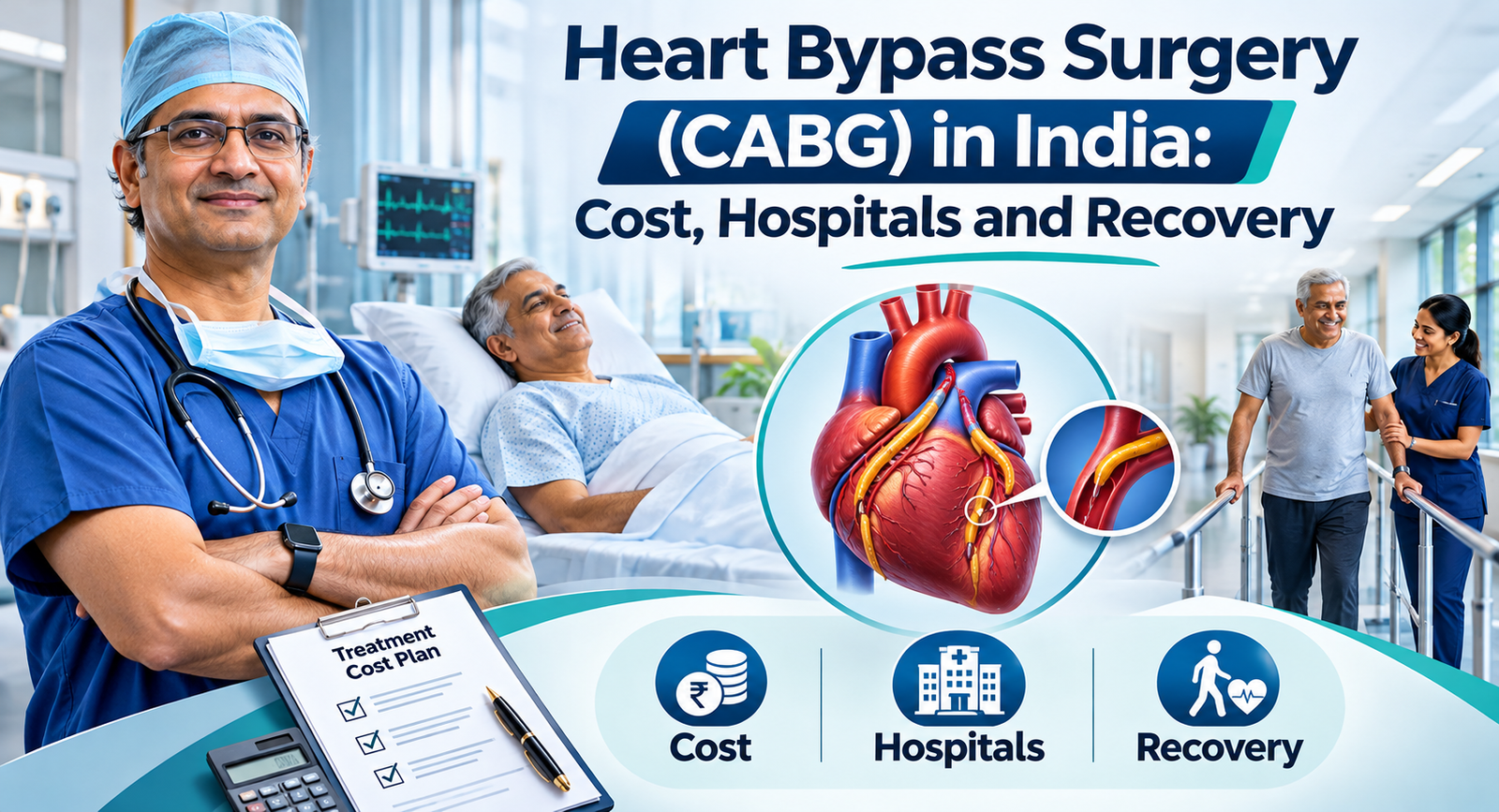
CABG stands for coronary artery bypass grafting. It is an operation that improves blood flow to the heart when the coronary arteries are narrowed or blocked by fatty deposits (plaque).
During the surgery, the surgeon takes a healthy blood vessel from another part of the body, usually from the chest wall, leg or arm, and uses it to create a new route around the blocked artery. Blood can then reach the heart muscle again.
Depending on how many arteries are blocked, patients may need a single, double, triple or quadruple bypass.
When Is Bypass Surgery Recommended?
A cardiologist or cardiac surgeon may recommend CABG for:
- Blockages in several coronary arteries
- A severe blockage in the main (left main) coronary artery
- Blockages that cannot be treated well with angioplasty and stents
- Chest pain (angina) that is not controlled by medicines
- Patients with diabetes and multi-vessel disease, where bypass often gives better long-term results
- Weak heart function caused by reduced blood supply
- Emergencies after a heart attack, in some cases
Bypass surgery or angioplasty?
Angioplasty opens a blocked artery with a balloon and usually places a stent. It is less invasive and suits many patients with one or two blockages. Bypass surgery is often preferred for complex, multiple, or left main blockages. A good heart team will review your angiography and explain which option suits you, and why.
Types of Heart Bypass Surgery Available in India
Conventional on-pump CABG
The heart is temporarily stopped, and a heart-lung machine takes over circulation while the surgeon places the grafts. This is the traditional method and is still widely used.
Off-pump CABG (beating heart surgery)
The surgery is done while the heart continues to beat, using special devices to keep the operating area still. Indian cardiac surgeons have extensive experience with this technique. It may reduce some risks in selected patients, such as those with kidney problems or older age.
Minimally invasive cardiac surgery (MICS CABG)
The surgeon reaches the heart through a small cut between the ribs rather than opening the breastbone. Suitable patients may have less pain, less blood loss and a faster return to daily activities.
Total arterial revascularisation
Only arteries (rather than leg veins) are used as grafts. Arterial grafts often stay open longer, which can benefit younger patients.
Robotic-assisted CABG
A few advanced centres in India offer robotic assistance for selected cases. It is not suitable for everyone, and your surgeon will advise.
Redo CABG
For patients who had bypass surgery before and now have new blockages. This is more complex and needs a highly experienced team.
Heart Bypass Surgery Cost in India
The cost of heart bypass surgery in India depends on the type of surgery, number of grafts, hospital, city, room category and your overall health. As a general guide for international patients:
|
Procedure |
Approximate cost in India (USD) |
|
CABG (on-pump or off-pump) |
5,000 – 8,000 |
|
Minimally invasive CABG (MICS) |
7,000 – 10,000 |
|
Redo CABG |
8,000 – 12,000 |
|
CABG with valve replacement |
8,500 – 13,000 |
|
Coronary angiography (diagnostic) |
300 – 600 |
These figures are indicative only. Your final estimate depends on your reports and the surgeon's plan. For comparison, heart bypass surgery in the US often costs USD 70,000 to 150,000.
What affects the cost?
- Type of surgery. Minimally invasive and robotic approaches cost more.
- Number of grafts and complexity. Combined procedures, such as bypass with valve surgery, cost more.
- Hospital stay and ICU days. Extra days in the ICU or ward add to the bill.
- Room category. Single rooms and suites cost more than shared rooms.
- Existing health conditions. Diabetes, kidney disease, lung disease or weak heart function may need extra care.
- Hospital and city. Large metro hospitals may have higher charges.
What is usually included?
Most hospital packages include the surgery, surgeon and anaesthesia fees, operating theatre charges, a fixed number of ICU and ward days, standard medicines, routine tests and in-hospital cardiac rehabilitation. Extra ICU days, blood products, and treatment of complications are usually charged separately. Our guide on what is included in a medical tourism package in India explains inclusions and exclusions in detail.
Why International Patients Choose India for Heart Surgery
- Experienced cardiac surgeons who perform large numbers of bypass operations every year
- Strong expertise in off-pump surgery, widely practised in leading Indian cardiac centres
- Significant savings compared with the US, UK, Canada and the Gulf, even after travel costs
- No long waiting lists – surgery can usually be planned within days of arrival
- NABH and JCI accredited hospitals with dedicated cardiac ICUs and modern cath labs
- Support for international patients, including interpreters, coordinators and accommodation help
How to Choose the Right Heart Hospital in India
The hospital and surgical team matter more than the price. When comparing options, look for:
- NABH or JCI accreditation for patient safety and infection control
- A dedicated cardiac sciences centre with cardiologists, cardiac surgeons, cardiac anaesthetists and intensivists working together
- An experienced cardiac surgeon – ask how many bypass surgeries they perform each year and their experience with your type of case
- A well-equipped cardiac ICU with round-the-clock specialist cover
- Modern cath labs for angiography and emergency procedures
- Clear communication about why bypass is recommended over angioplasty, or vice versa
- A cardiac rehabilitation programme to support recovery
- Transparent, itemised cost estimates and strong international patient support
India's leading cardiac hospitals are spread across Delhi NCR, Mumbai, Chennai, Bengaluru, Hyderabad and Kolkata. Our guide on how to choose the right hospital in India gives a complete checklist.
The Heart Bypass Surgery Process: Step by Step
1. Share your reports
Send your coronary angiography report and CD or images, echocardiogram (ECHO), ECG, blood tests, list of medicines, and details of other health conditions. A cardiac surgeon reviews them and suggests a plan and cost estimate.
2. Plan your trip
Once you choose a hospital, you receive a medical invitation letter for your e-Medical visa. One or two family members can travel with you on e-Medical Attendant visas. Our guide on how to plan your medical trip to India covers visas, flights and accommodation.
3. Evaluation in India (Days 1–3)
You meet the cardiologist and cardiac surgeon. Tests may include blood work, ECG, ECHO, chest X-ray, lung function tests and, if needed, a repeat angiography. Blood sugar and blood pressure are brought under control before surgery.
4. Surgery (Day 3–4)
Bypass surgery usually takes 3 to 6 hours under general anaesthesia, depending on the number of grafts and the technique.
5. Cardiac ICU (2–3 days)
After surgery, you are closely monitored in the cardiac ICU. The breathing tube is usually removed within hours, and most patients sit up and begin breathing exercises within a day or two.
6. Ward recovery (3–5 days)
You start walking short distances, continue breathing exercises and begin cardiac rehabilitation with physiotherapists.
7. Recovery in India and fitness to fly
After discharge, you stay near the hospital for follow-up checks and wound review. Your surgeon confirms when it is safe to fly, usually 2 to 3 weeks after surgery.
How Long Will You Stay in India?
|
Stage |
Typical duration |
|
Pre-surgery evaluation |
2 – 3 days |
|
Hospital stay (ICU and ward) |
6 – 8 days |
|
Recovery near the hospital after discharge |
10 – 14 days |
|
Total stay in India |
3 – 4 weeks |
Minimally invasive surgery may shorten the hospital stay. Patients with other health conditions may need more time.
Recovery After Heart Bypass Surgery
Recovery is gradual, and every patient is different. A typical timeline looks like this:
- First week: short walks, breathing exercises and pain control
- Weeks 2–4: longer walks, light activity at home, follow-up checks
- Weeks 4–6: most patients return to light daily routines and office work
- 6–8 weeks: the breastbone heals in conventional surgery; driving is often allowed around this time
- About 3 months: many patients feel stronger and more energetic than before surgery
Tips for a smoother recovery
- Protect your breastbone after conventional surgery: avoid lifting heavy objects and pushing or pulling with your arms for 6 to 8 weeks.
- Walk every day, increasing the distance gradually as advised.
- Take your medicines regularly, including blood thinners, cholesterol medicines and blood pressure tablets.
- Follow a heart-healthy diet with less salt, fried food and sugar.
- Stop smoking completely. This is one of the most important steps to keep the new grafts open.
- Join cardiac rehabilitation at home if available, and keep regular check-ups.
- On the flight home, request an aisle seat and wheelchair help, stay hydrated and move your legs regularly.
Risks of Heart Bypass Surgery
CABG is a well-established and widely performed operation, but like any major surgery it carries risks. These can include bleeding, infection, irregular heartbeat (often temporary), kidney problems, stroke and, rarely, heart attack. Your surgeon will explain your personal risk based on your age, heart function and other conditions. Choosing an experienced team at an accredited hospital and following your recovery plan helps reduce these risks.
How Long Does a Bypass Last?
Arterial grafts, especially the internal mammary artery, often stay open for 15 to 20 years or longer. Vein grafts may last 10 to 15 years. How long they last depends greatly on lifestyle: not smoking, controlling cholesterol, blood pressure and diabetes, and staying active.
How CureTours India Helps Heart Surgery Patients
At CureTours India, we support international patients through every step of heart bypass surgery in India:
- Free review of angiography and cardiac reports by experienced cardiac surgeons
- Opinions on bypass surgery versus angioplasty from more than one hospital
- Transparent cost estimates from NABH and JCI accredited cardiac centres
- Visa invitation letter support for the patient and attendants
- Airport pickup, accommodation near the hospital and local transport
- Interpreters and a dedicated patient coordinator
- Cardiac rehabilitation guidance and teleconsultation follow-ups after you return home
Explore our cardiology treatment services, or share your reports with our team for a personalised plan, with no pressure to decide.
Frequently Asked Questions
What is the cost of heart bypass surgery in India?
For international patients, heart bypass surgery (CABG) in India usually costs around USD 5,000 to 9,000, depending on the type of surgery, number of grafts, hospital and length of stay. Minimally invasive and redo surgeries cost more.
How long do I need to stay in India for bypass surgery?
Most patients stay in hospital for 6 to 8 days and in India for a total of 3 to 4 weeks, including tests before surgery and recovery after discharge.
What is the success rate of bypass surgery in India?
Leading cardiac hospitals in India report outcomes comparable to international centres for planned bypass surgery. Your personal risk depends on age, heart function and other health conditions, so ask your surgeon to explain it for your case.
What is the difference between on-pump and off-pump bypass surgery?
In on-pump surgery, a heart-lung machine supports circulation while the heart is stopped. In off-pump (beating heart) surgery, the operation is done while the heart keeps beating. Your surgeon will choose the safer method for you.
Is angioplasty better than bypass surgery?
Neither is better for everyone. Angioplasty suits many patients with one or two blockages, while bypass surgery is often preferred for multiple, complex or left main blockages, especially in people with diabetes. A heart team should review your angiography before deciding.
When can I fly home after bypass surgery?
Most patients are cleared to fly about 2 to 3 weeks after surgery, once the surgeon confirms they are stable. Request wheelchair assistance and an aisle seat, and move your legs during the flight.
How long does a heart bypass last?
Arterial grafts often last 15 to 20 years or more, and vein grafts around 10 to 15 years. Not smoking and controlling cholesterol, blood pressure and diabetes help grafts last longer.
What reports should I send for a bypass surgery opinion?
Send your coronary angiography report with images or CD, echocardiogram, ECG, recent blood tests, a list of current medicines and details of other health conditions.
Disclaimer: This article is for general information only and is not medical advice. Costs, risks and recovery times vary for each patient. Please consult a qualified cardiologist or cardiac surgeon before making treatment decisions.