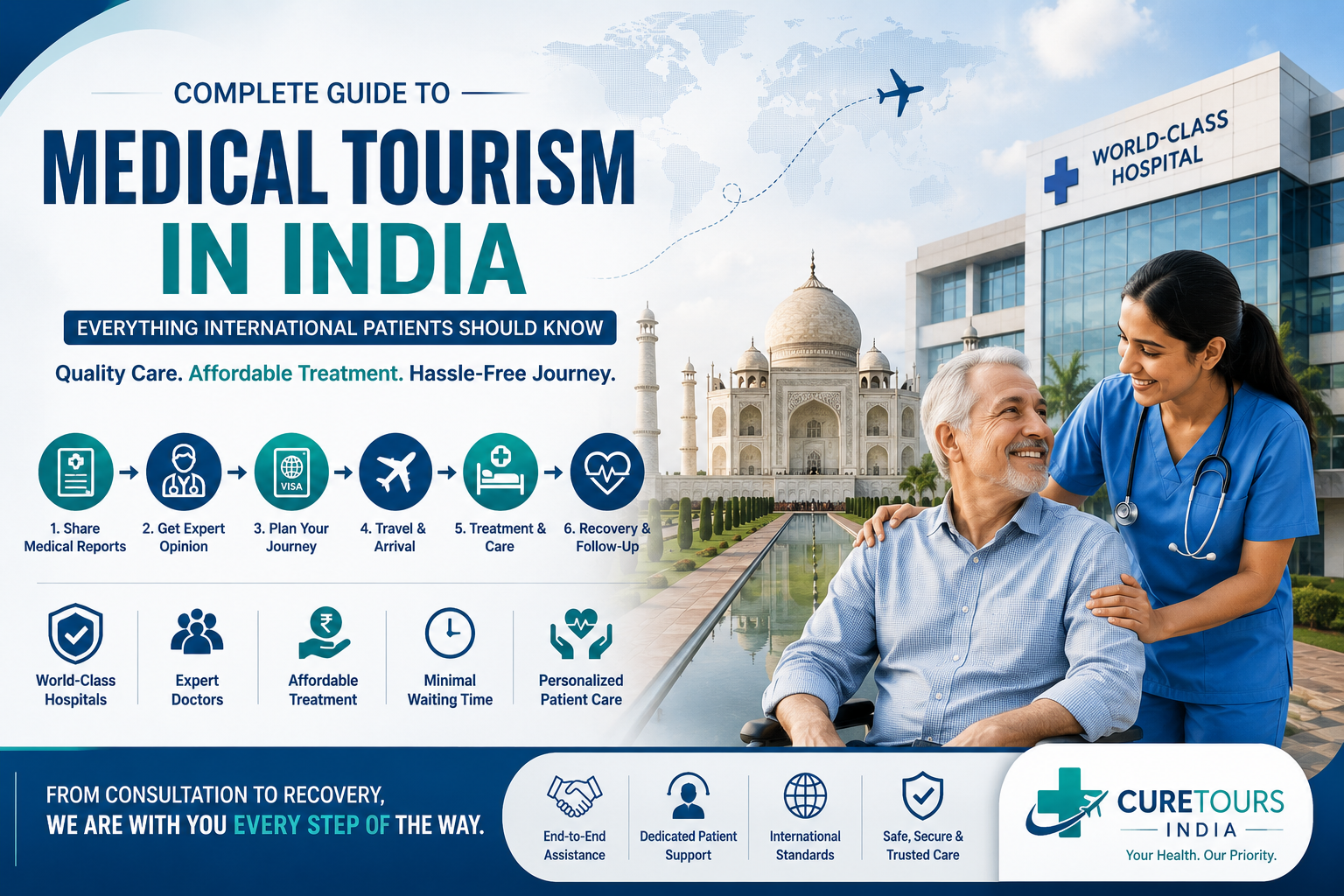

Traveling abroad for medical treatment can seem overwhelming, especially if it's your first time. Questions about hospitals, doctors, visas, accommodation, treatment costs, and post-operative care are common.
Fortunately, India has developed one of the world's most organized medical tourism ecosystems, making it easier than ever for international patients to receive high-quality healthcare.
This guide explains every step involved in planning medical treatment in India.
Step 1: Share Your Medical Reports
The process begins by sharing:
- Medical history
- Diagnostic reports
- MRI or CT scans
- Blood test reports
- Current medications
Medical experts review these documents to recommend suitable treatment options.
Step 2: Receive Expert Medical Opinion
After reviewing your reports, specialists provide:
- Diagnosis confirmation
- Recommended treatment plan
- Estimated treatment duration
- Hospital recommendation
- Cost estimate
Patients can compare options before making a decision.
Step 3: Plan Your Medical Journey
Once treatment is confirmed, travel arrangements begin.
These typically include:
- Medical Visa guidance
- Invitation letter from hospital
- Flight planning
- Hotel booking
- Airport transfers
- Appointment scheduling
Proper planning ensures a smooth arrival in India.
Step 4: Arrival and Hospital Admission
Upon arrival, patients are assisted with:
- Airport pickup
- Hotel check-in
- Hospital registration
- Consultation scheduling
- Interpreter support if required
This allows patients to focus entirely on their health.
Step 5: Diagnosis and Treatment
Depending on the medical condition, additional diagnostic tests may be performed before treatment begins.
Treatment options may include:
- Surgery
- Medication
- Radiation Therapy
- Chemotherapy
- Rehabilitation
- Physiotherapy
Patients receive individualized care from experienced specialists.
Step 6: Recovery and Rehabilitation
Recovery is an essential part of successful treatment.
Indian hospitals provide:
- Regular monitoring
- Rehabilitation programs
- Nutritional support
- Physiotherapy
- Medication guidance
- Discharge planning
Many patients also choose wellness therapies to support recovery.
Step 7: Returning Home
Before discharge, patients receive:
- Complete medical records
- Prescription medications
- Follow-up instructions
- Online consultation schedule
- Emergency contact information
Many hospitals continue virtual consultations after patients return home.
Common Treatments Chosen by Medical Tourists
International patients frequently visit India for:
Cardiology
Heart bypass surgery, angioplasty, valve replacement, congenital heart procedures.
Orthopedics
Hip replacement, knee replacement, sports injuries, spine surgery.
Oncology
Cancer diagnosis, chemotherapy, radiation therapy, immunotherapy.
Fertility Treatment
IVF, ICSI, fertility preservation, donor programs.
Cosmetic Surgery
Rhinoplasty, liposuction, facelift, hair transplantation.
Dental Treatment
Dental implants, smile makeovers, root canal therapy, orthodontics.
Benefits of Choosing India
Patients choose India because of:
- Affordable healthcare
- Experienced doctors
- Modern hospitals
- Advanced medical equipment
- English-speaking medical professionals
- Faster appointments
- Personalized patient care
- Complete medical tourism support
Tips Before Traveling
To ensure a smooth experience:
- Carry all medical records.
- Keep digital copies of important documents.
- Confirm your treatment schedule.
- Arrange travel insurance if applicable.
- Follow your doctor's pre-travel instructions.
- Bring sufficient prescription medications for the journey.
Why Choose CureTours India?
CureTours India serves as a trusted healthcare partner for international patients by offering end-to-end assistance throughout the treatment journey. From helping you select the right hospital and specialist to coordinating travel, accommodation, and follow-up care, the team focuses on making medical travel simple, transparent, and patient-centric.
Whether you are seeking cardiac care, orthopedic surgery, cancer treatment, fertility services, or other specialized procedures, CureTours India works to ensure that your experience is comfortable and well-coordinated from the moment you inquire until you safely return home.
Conclusion
Medical tourism in India offers more than affordable treatment—it provides access to experienced specialists, advanced healthcare facilities, personalized support, and comprehensive care under one roof. With proper planning and the right guidance, international patients can receive high-quality medical treatment while enjoying a seamless travel experience.
If you are considering treatment abroad, partnering with a reliable medical tourism facilitator like CureTours India can help you navigate every step with confidence.